Hotels · Reports & eBook
How Dog-Friendly Stays Are Boosting Luxury Hotel Revenue

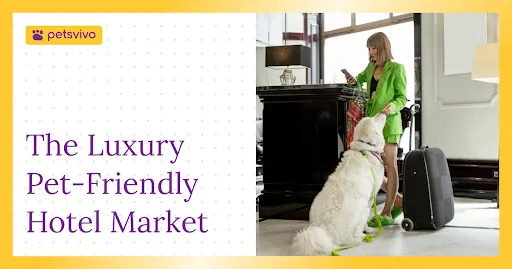
Most luxury hotels have a pet policy. Very few have a pet strategy. The difference between the two shows up directly in weekend occupancy, guest loyalty, and ancillary revenue, and the gap is getting harder to ignore. Dog-welcome experience bookings surged 260% year-on-year in 2025, according to Tripadvisor’s 2026 Trendcast, based on global booking and behavioral data across the platform.
The global pet-friendly hotel market was valued at $4.6 billion in 2025 and is projected to reach $8.17 billion by 2030 at a 12.2% CAGR, according to The Business Research Company. This is not a niche segment growing slowly at the edges of hospitality. It is becoming a primary demand driver, and the luxury segment is where it plays out most clearly.
Why Is the Dog-Friendly Opportunity Especially Valuable in Luxury Hotels?
Luxury pet travelers are not looking for tolerance. They are looking for an experience that extends to their animal. They spend more, plan more deliberately, and return to properties that got it right. AirDNA’s 2025 Growth Trends data confirms that pet-friendly properties earn $17.41 more in average daily rate than comparable non-pet listings, and receive 5.4% more demand. At the luxury end, that premium compounds.
Guests who travel with dogs are already invested in the trip. Adding a hotel that actively enhances that experience, rather than just permitting it, is what converts a first stay into a repeat booking. 47% of EMEA travelers say pet-friendly accommodation is important to them, according to Marriott Bonvoy’s 2026 Ticket to Travel Report, based on a survey of more than 22,000 adults. And according to the Amadeus and Globetrender Travel Trends 2026 Report, 27% of pet owners who traveled with their pet in 2025 were doing so for the first time. That is a wave of new pet travelers actively discovering which hotels deserve their loyalty.
What Does a Real Dog-Friendly Strategy Look Like?
South Place Hotel in the City of London offers one of the clearest working examples. Dean Culpan, the hotel’s General Manager, identified a structural problem: a business hotel in the City of London naturally struggles with weekend occupancy. His response was to target a renter segment that competitors were not prioritizing.
“One of my first strategies was, ’Why aren’t we dog-friendly?’ Culpan explained in a conversation with Mews CEO Matt Welle for the Matt Talks podcast series. The decision was both personal and strategic.
South Place built what Culpan describes as a complete ecosystem for dog-owning guests:
- In-room setup: plush dog beds, high-quality bowls, and launderable rugs in pet-allocated rooms
- Arrival experience: personalized greeting cards at check-in, extending the welcome explicitly to the dog
- Local intelligence: curated guides to dog-friendly walks and activities across London
- Staff culture: trained to extend hospitality to the guest’s companion, not just the guest
Dogs are welcome in all areas of the hotel on a lead, including the bar and restaurant spaces, with the exception of the Michelin-starred Angler restaurant. That specificity matters. It gives dog-owning guests the clarity they are searching for before they book.
The VIP Pet Model: What It Covers
The South Place approach reflects a broader framework that the highest-performing pet-friendly luxury hotels are applying consistently. Each element addresses a specific friction point that causes pet-owning guests to hesitate or, once they arrive, feel underserved.
| Element | What It Solves | Example at South Place |
|---|---|---|
| Clear policy communication | Removes booking uncertainty | Pets welcome in all areas except one named restaurant |
| In-room pet setup | Eliminates “will they be comfortable?” anxiety | Plush beds, bowls, launderable rugs |
| Personalized arrival | Signals genuine welcome, not just permission | Greeting cards addressed to the dog |
| Local pet guides | Extends the stay experience beyond the room | Curated dog-friendly walks and activity maps |
| Staff training | Consistent delivery across the team | Hospitality extended to the companion, not just the guest |
| Direct booking incentive | Captures reservation without OTA commission | Dogs stay free on direct bookings |
What Occupancy Problem Does Dog-Friendliness Actually Solve?
Business hotels in city centers face a predictable pattern: high weekday demand from corporate travelers, soft weekend occupancy. Pet-owning leisure travelers who want to explore a city with their dog are a natural weekend audience that most business hotels have never pursued.
Culpan’s observation captures it directly: “A lot more of our clients are going to bring their pets with them rather than children.” That is a behavioral shift with real implications for room night demand.
A couple with a dog planning a city weekend is not choosing between pet-friendly hotels. They often choose between a handful of properties that have bothered to make the experience clear and welcoming, and a much larger group that either prohibits pets or permits them without any real consideration.
The occupancy lift from targeting this segment is both measurable and sustainable. It does not require discounting. It requires intention.
How Should Hotels Approach Staff Training for Pet-Friendly Stays?
“It’s having the attitude, staff training, staff understanding, and extending that hospitality not only to the guests, but also to the guests’ fluffy friend,” Culpan advises.
What This Looks Like in Practice
Staff training for pet-friendly hospitality does not require extensive new skills. It requires three things:
- Awareness: know which rooms are pet-allocated, what amenities are in them, and what the hotel’s dog access policy covers, area by area
- Confidence: be able to answer specific pet policy questions at booking, check-in, and during the stay without escalating or hedging
- Initiative: acknowledge the dog at arrival the same way they acknowledge the guest, by name if it is on the reservation, with direct, warm interaction
The guest who feels their dog was genuinely welcomed is far more likely to return and to recommend the property to other pet owners. Word of mouth in the pet-travel community is highly active. Dog owners talk to other dog owners about which hotels are worth it.
Conclusion
The luxury pet travel market is growing fast and rewarding the hotels that take it seriously with occupancy gains, ADR premiums, and the kind of guest loyalty that is difficult to manufacture through points programs and discounts. The South Place Hotel example is not exceptional. It is instructive. A city business hotel identified a weekend occupancy gap, made a deliberate decision to serve a specific guest with a specific companion, and built an experience around it. The result is a repeatable model that any luxury property can adapt. The demand is already there. The gap is in execution.
Frequently Asked Questions
Why are dog-friendly stays growing in luxury hotels specifically?
Luxury pet travelers expect the same quality of experience for their animal as for themselves. Standard pet tolerance does not meet that expectation. Hotels that build a genuine experience around dog-owning guests command higher ADR, generate stronger loyalty, and access a segment growing at over 12% annually.
What is the minimum a luxury hotel needs to offer to be genuinely dog-friendly?
Clear policy communication, in-room pet amenities, trained staff who extend a welcome to the animal, and access to most hotel spaces. Anything less feels like tolerance rather than welcome, and pet travelers notice the difference.
How does dog-friendliness help with weekend occupancy?
City business hotels naturally have soft weekend demand. Pet-owning leisure travelers who want to explore a city with their dog are a natural weekend segment that most business hotels have not pursued. Targeting them fills a structural gap without discounting.
Do pet-friendly properties earn more per booking?
Yes. AirDNA's 2025 data shows pet-friendly properties earn $17.41 more in average daily rate than comparable non-pet listings and receive 5.4% more demand. At the luxury level, that ADR premium compounds further.
How fast is the pet-friendly hotel market growing?
The global pet-friendly hotel market was $4.6 billion in 2025 and is projected to reach $8.17 billion by 2030 at a 12.2% CAGR, according to The Business Research Company's 2026 report.