Housing · Reports & eBook
28,000 Pets Surrendered Because of Housing; The Data Still Holds Today
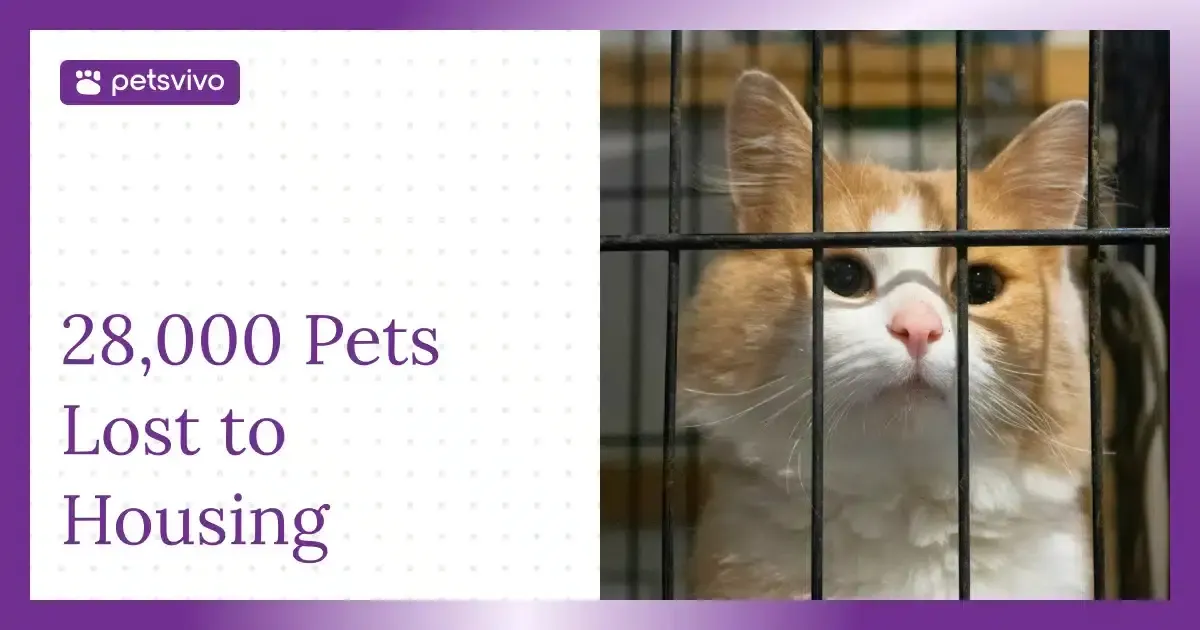
Nobody plans to give up their pet. But for thousands of renters across the U.S., housing policies are making that choice for them.
In 2024, a peer-reviewed study published in Frontiers in Veterinary Science analyzed over 28,000 shelter intake records from 21 animal shelters across 15 states between 2019 and 2023. The trends it identified have not slowed down. If anything, they have gotten worse.
What Did the Shelter Study Actually Find?
Housing issues accounted for 14% of all shelter intakes in the study. That is roughly 1 in 7 animals surrendered because of where their owner lives, not because of the animal’s behavior.
The breakdown by subtype:
- 54% unspecified housing issues (moving, relocation)
- 27% pet restrictions, such as breed bans and weight limits
- 8% landlord conflicts
- 5% housing loss, including eviction and foreclosure
- 5% unhoused pet owners
Large and small dogs were surrendered at the highest rates. Pit bull-type dogs made up 12% of all housing-related relinquishments and faced a higher likelihood of shelter death than other breeds. Cats represented 37% of all housing-related surrenders, a share that grew over the study period.
Of all animals surrendered for housing reasons, 95% left the shelter alive through adoption (76%), transfer to another organization (12%), foster placement, or return to the wild. Only 3% were returned to their original owners.
Pet Inclusive Housing: Study Findings + Current Data
The figures below combine findings from the 2024 peer-reviewed study with current housing and shelter data. Together, they show both the scale of the problem that was documented and how conditions have shifted since.
| Metric | Figure | Source |
|---|---|---|
| Housing-related shelter intakes (study) | 14% of all intakes | Frontiers in Veterinary Science, 2024 |
| Total housing-related records analyzed | 28,424 across 21 shelters, 15 states | Frontiers in Veterinary Science, 2024 |
| Largest surrender subtype | Unspecified housing (54%) | Frontiers in Veterinary Science, 2024 |
| Pet restriction-related surrenders | 27% of housing intakes | Frontiers in Veterinary Science, 2024 |
| Animals returned to original owners | 3% | Frontiers in Veterinary Science, 2024 |
| Total dogs and cats entering shelters (2024) | 5.8 million | ASPCA, 2024 |
| Cost-burdened renter households | 22.6 million (record high) | Harvard JCHS, 2025 |
| Renter households with pets | 72% | Humane Society of the United States |
| Truly pet-inclusive rental housing (no restrictions) | ~8% of U.S. market | Pet Inclusive Housing Initiative |
| Pets that could be saved by lifting rental restrictions | Up to 10.5 million | Pet Inclusive Housing Initiative, 2021 |
What Shifted Between 2019 and 2023?
The study tracked meaningful changes over the five-year window.
Intakes due to pet restrictions and landlord conflicts decreased over time. The study’s lead author, Dr. Jennifer Applebaum of the University of Florida, noted that this likely signals a slow cultural shift toward more pet-inclusive housing. But intakes due to housing loss, evictions, and foreclosures increased significantly over the same period.
The gap between those two trends tells the story: policies may be improving, but economic pressures are accelerating faster than policy can keep up.
Why This Data Matters More in 2026
The housing affordability crisis that the study flagged has deepened since the data was collected.
Harvard’s State of the Nation’s Housing 2025 report confirmed that a record 22.6 million renter households were cost-burdened in 2023, meaning they spend more than 30% of their income on housing. The renting population grew by another 848,000 in 2024 as homeownership moved further out of reach. In that same year, homelessness in the U.S. reached 771,480 people, a record high.
On the shelter side, the ASPCA reports that 5.8 million dogs and cats entered shelters in 2024, with large dogs staying longer before adoption. More animals in, fewer moving out.
The scale of what pet inclusivity could change is significant. According to the Pet Inclusive Housing Initiative 2021 report, easing rental pet restrictions could prevent up to 10.5 million pets from being surrendered nationwide, and house an estimated 8.2 million additional animals that currently have nowhere to go.
What Should Property Operators Take Away?
Only about 8% of U.S. rental housing is truly pet inclusive, free of breed, weight, and size restrictions, according to the Pet Inclusive Housing Initiative. Meanwhile, 72% of renter households own at least one pet, per the Humane Society of the United States.
That gap is what fills shelters.
The study’s conclusion is clear. The culture around pet inclusivity is slowly improving. But housing affordability is moving in the opposite direction. Properties that remove outdated breed bans, weight limits, and punitive pet fees are not just reducing shelter intake pressure. They are filling vacancies faster, retaining tenants longer, and building stronger communities.
Frequently Asked Questions
What percentage of animal shelter intakes are housing-related?
According to the 2024 Frontiers in Veterinary Science study, 14% of shelter intakes across 21 U.S. shelters from 2019 to 2023 were directly tied to housing issues.
Which animals are most affected by restrictive rental housing policies?
Large and small dogs face the highest surrender rates. Pit bull-type dogs make up 12% of housing-related relinquishments and face a higher euthanasia risk. Cats represent 37% of all housing surrenders.
Did the percentage of pet-related housing surrenders improve over time?
Yes. Surrenders due to pet restrictions and landlord conflicts declined between 2019 and 2023, suggesting slow policy improvement. However, surrenders from evictions and housing loss increased over the same period.
How many pets could be kept out of shelters if rental restrictions were lifted?
The Pet Inclusive Housing Initiative estimates up to 10.5 million pets could be prevented from shelter surrender, and 8.2 million additional animals could be housed, if rental pet restrictions were removed.
What share of U.S. rental housing is fully pet-inclusive?
Only about 8% of market-rate rental housing in the U.S. is free of breed, weight, or size restrictions, according to the Pet Inclusive Housing Initiative.